Tell us about the job
Takes about a minute. No obligation.
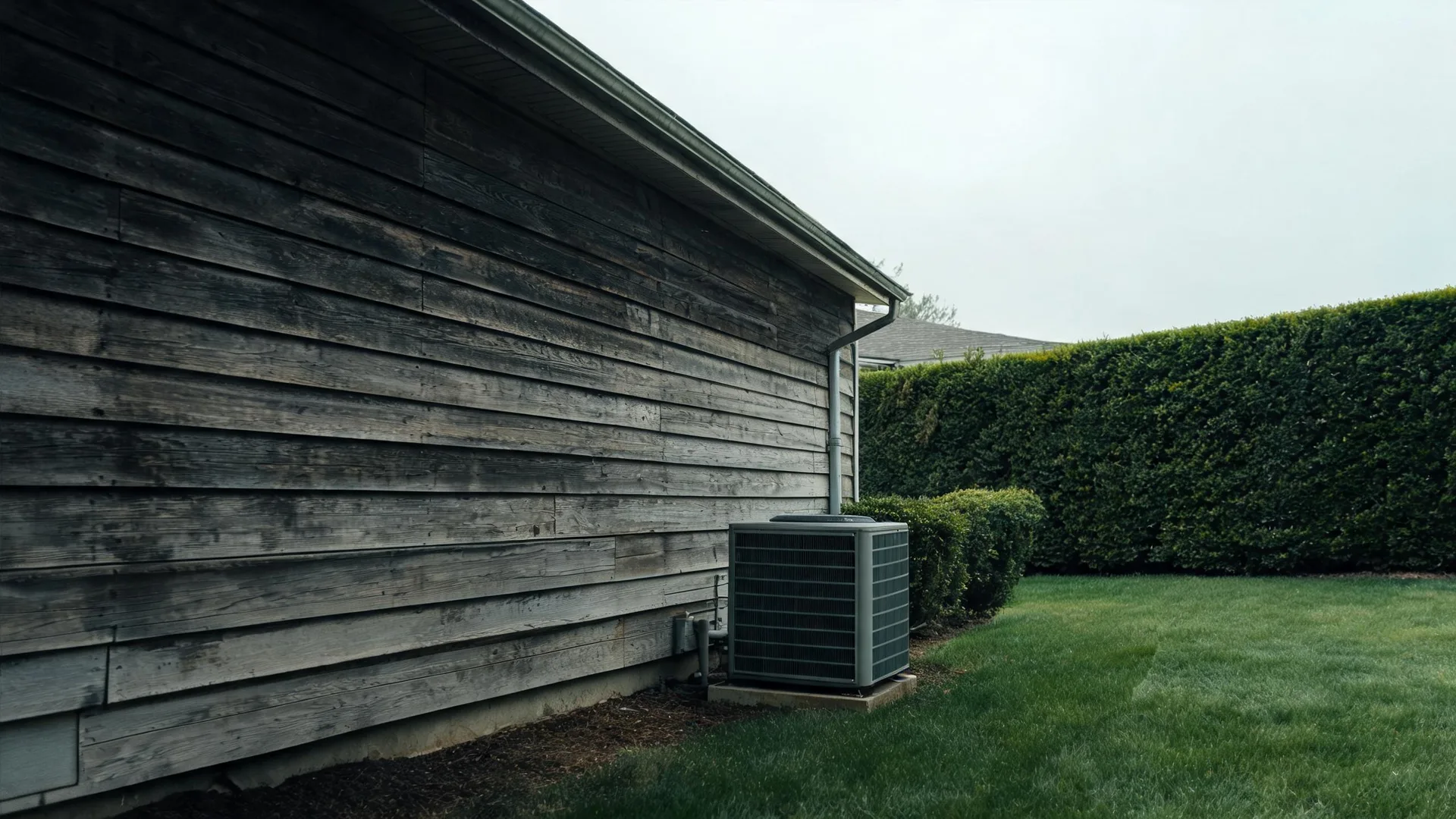
A compressor that sits idle almost every day of every year faces a different set of problems than one that cycles through a long season. Homes in Garrett County, MD have essentially no cooling season — no month of the year is warm enough to call for it. Seals dry out. Lubricants settle. A system that is rarely called on can develop faults that stay hidden until the first genuinely warm day, and that is exactly when a contractor's schedule fills up. When a repair call finally comes in, the contactor and capacitor are the first things checked, because those are the parts that bear the brunt of infrequent cold starts rather than sustained summer load.
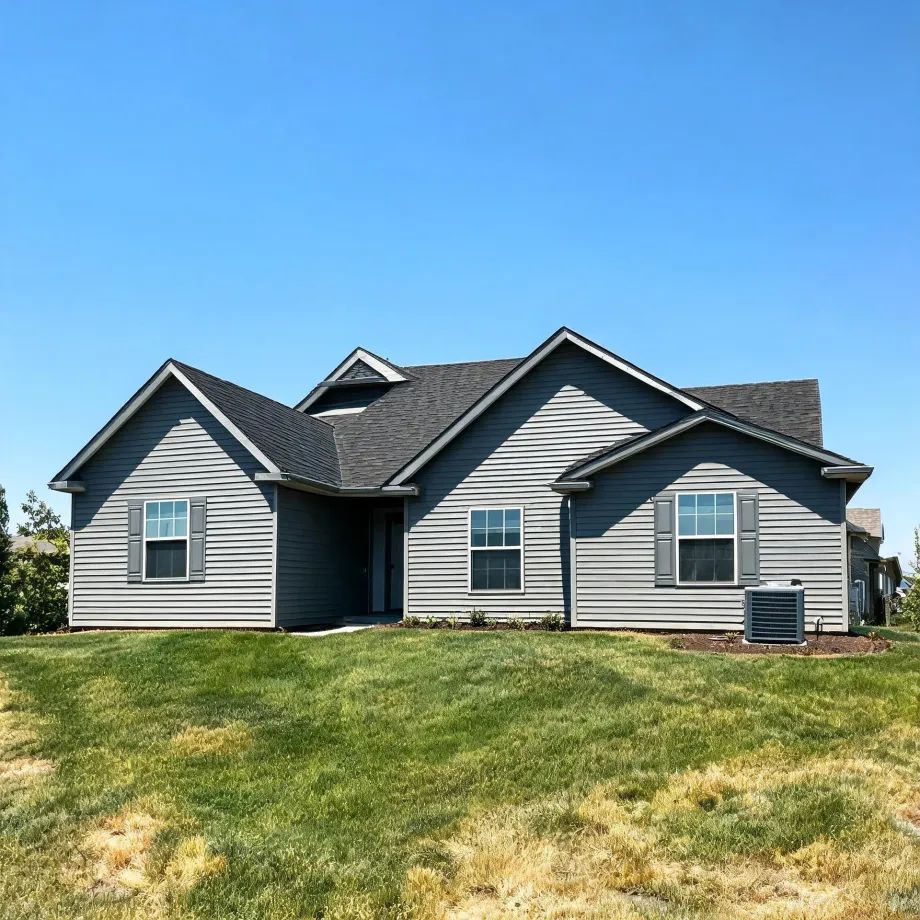
A refrigerant leak or a failed capacitor is a different repair depending on what the opened system turns out to need and whether those parts are still in active production. Half the homes in Garrett County, Maryland were built in 1982 or earlier (2020-2024 ACS 5-year). Systems running in houses built around that period have outlasted several product generations, and the components they take are not always on a distributor's shelf. When a contractor opens the unit, the question is not only what failed but whether a replacement part ships in days or requires sourcing from secondary suppliers, which changes the repair timeline and what the contractor recommends.
The Parts of a Central AC a Contractor Checks First
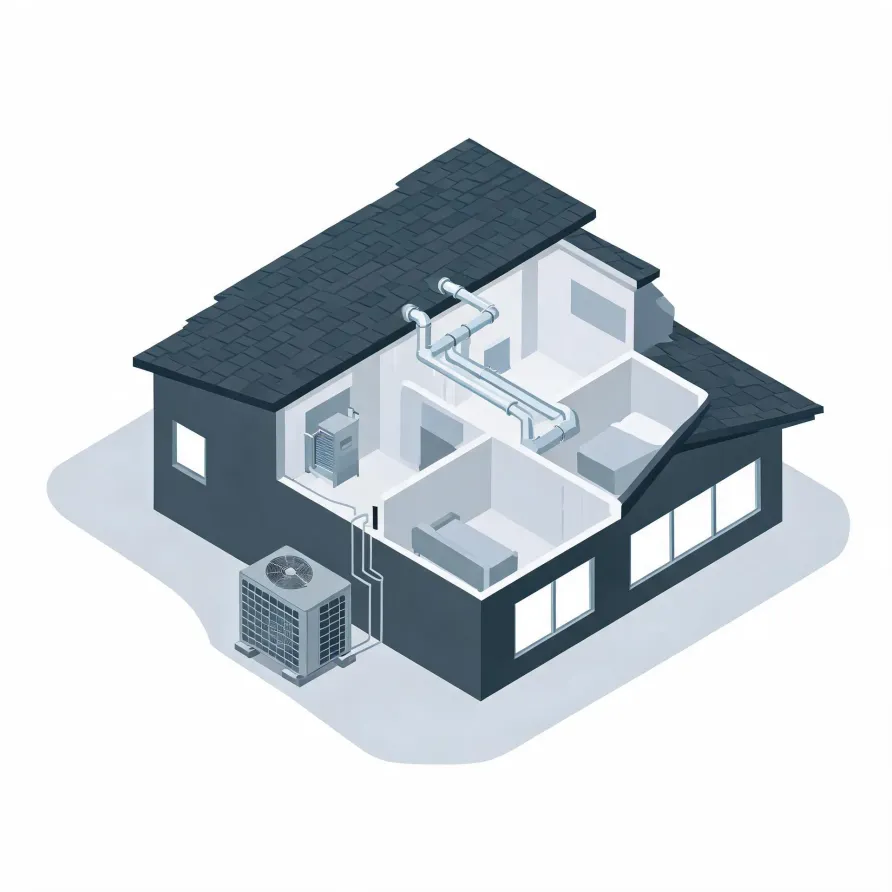
The outdoor condenser unit sits outside the house, usually on a concrete pad at ground level, and it holds the compressor and condenser coil. These are the parts a contractor goes to when the system runs but produces no cooling, makes a hard grinding noise, or trips a breaker. The compressor in particular draws attention early.
Inside, the air handler or furnace cabinet houses the evaporator coil and the blower that moves air through the house. The evaporator coil is where refrigerant does its work, so a frozen coil, water pooling at the base of the cabinet, or weak airflow through the vents all point a contractor back to this component. A metering device and a set of refrigerant lines connect the two units.
The drawing shows a typical layout, and a licensed contractor determines which components and access points apply to your specific system.
Get matched in Garrett CountyGarrett County by the numbers
74 severe weather events were recorded in Garrett County, Maryland between 2015 and 2024.
NOAA National Centers for Environmental Information, Storm Events Database, bulk CSV export, events 2015-01-01 through 2024-12-31.Half the homes in Garrett County, Maryland were built in 1982 or earlier (2020-2024 ACS 5-year).
U.S. Census Bureau, 2020-2024 American Community Survey 5-Year EstimatesGarrett County, Maryland holds 18,642 housing units (2020-2024 ACS 5-year).
U.S. Census Bureau, 2020-2024 American Community Survey 5-Year EstimatesOwners occupy 79.7% of the occupied homes in Garrett County, Maryland (2020-2024 ACS 5-year).
U.S. Census Bureau, 2020-2024 American Community Survey 5-Year EstimatesRules & Standards Governing Central AC Repair in Garrett County, Maryland9 sourced rules and standards
What Happens When a Contractor Comes Out
Split-system central air conditioners rated below 45,000 Btu/h manufactured on or after January 1, 2023 must meet a federal minimum of 13.4 SEER2.
Split-system central air conditioners rated at or above 45,000 Btu/h manufactured on or after January 1, 2023 must meet a federal minimum of 13.4 SEER2.
Split-system central air conditioners manufactured between January 1, 2015 and December 31, 2022 had to meet 13 SEER, the metric that preceded SEER2.
Single-package central air conditioners manufactured on or after January 1, 2023 must meet a federal minimum of 13.4 SEER2.
Space-constrained central air conditioners manufactured on or after January 1, 2023 must meet a federal minimum of 11.7 SEER2.
Federal efficiency standards for split-system central air conditioners and heat pumps are set on each certified combination of outdoor unit and indoor coil rather than on the outdoor unit alone.
Residential and light commercial air conditioning and heat pump systems assembled in the field, including mini-splits and unitary systems, may not be installed on or after January 1, 2025 using a refrigerant with a global warming potential above 700.
A field-assembled system whose specified components were all manufactured or imported before January 1, 2025 carries no installation compliance date under the refrigerant restrictions and may still be installed.
What Garrett County, Maryland Requires for HVAC Repair
Maryland requires a state licence before an individual provides, or assists in providing, heating, ventilation, air-conditioning or refrigeration services.
Severe Weather Events in Garrett County
Garrett County's climate puts real stress on central AC systems, and that stress compounds over time. Repair needs here are shaped by local conditions, which is why weather history belongs alongside any honest look at what the equipment is up against.
74 severe weather events, 2015–2024. Source: NOAA National Centers for Environmental Information, Storm Events Database.