
Why your AC outdoor fan isn't spinning in Maryland
Why isn't my AC's outdoor fan spinning?
A Maryland afternoon with no breeze, the house holding heat, and you walk outside to check the condenser. The compressor is humming or clicking, but that fan on top isn't turning. No air is moving through the unit at all. With how sticky it gets here, every hour this sits broken is an hour the house keeps climbing. You need to know if this is something simple or if the system is about to be in real trouble.
Usually a bad capacitor or a failed fan motor
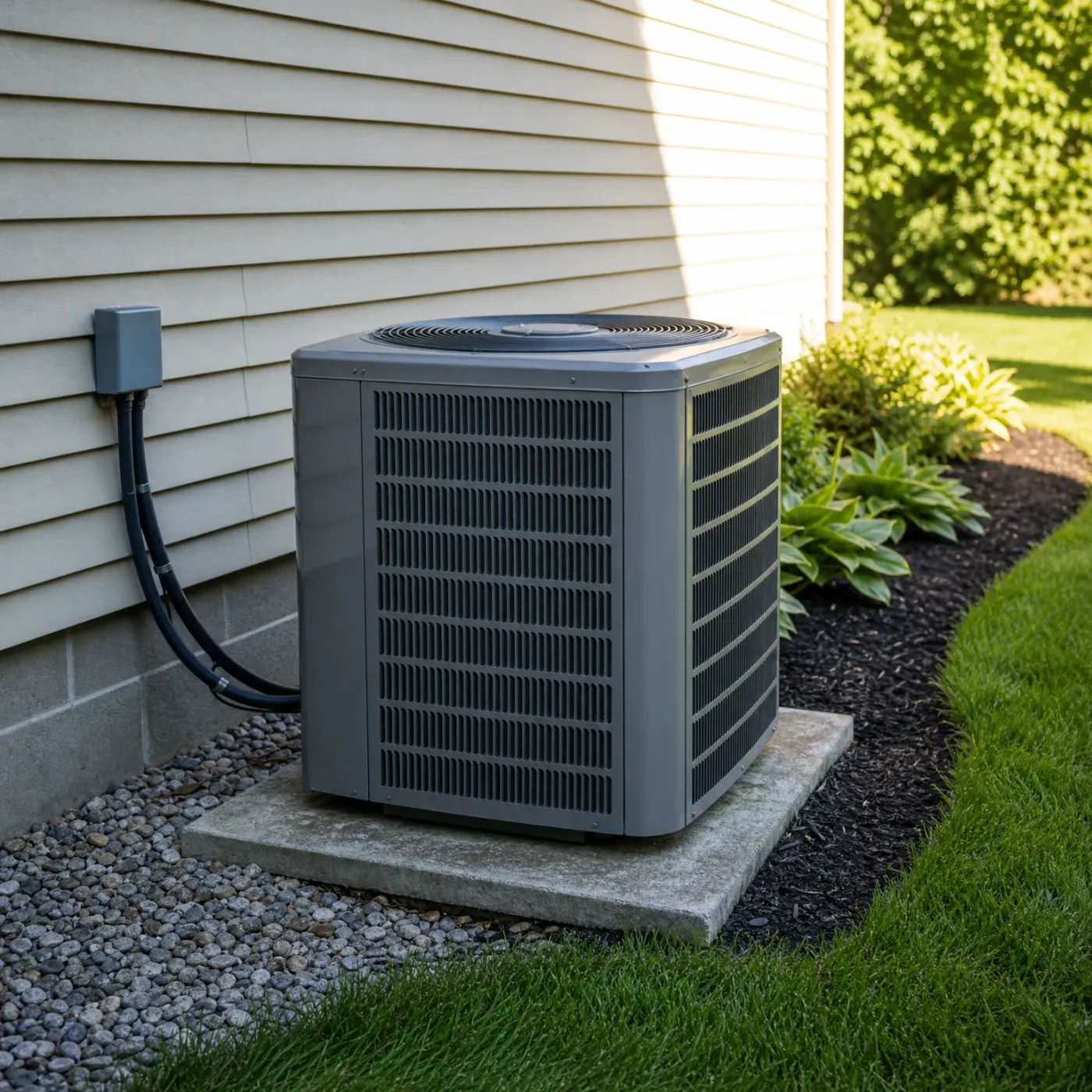
Most of the time, the fan motor itself has failed, or the capacitor that gives it the jolt to start turning has gone bad. A capacitor that's weak will let the compressor run while the fan sits still, which is why you hear the unit working but see nothing move. Sometimes the motor bearings have simply seized after years of running through Maryland summers. Either way, running the system like this isn't something to wait out. The compressor can overheat fast with no fan pulling air across the coil, and a compressor replacement costs far more than the fan motor or capacitor that caused the problem. If the outdoor fan isn't spinning, the system needs to be shut off until someone looks at it.

What keeps that fan from turning
The fan motor has its own run capacitor, separate from the one that starts the compressor. When that capacitor weakens, the motor can hum without turning, or turn slowly and stop. Heat speeds up that wear, and a condenser sitting in direct sun through a Maryland summer runs hotter than one in shade. A seized motor bearing or a broken fan blade will stop it cold too, and neither is something to force by hand.

Why letting it sit makes it worse
The compressor still runs even when the fan doesn't, at least for a while, and it needs that airflow to shed heat. Without it, pressures climb and the compressor can trip off on high heat or wear down faster than it should. A unit that cycles like this on a 90 degree day is working against itself, and with electric heat and cooling already costly in Maryland, a dead compressor is a far bigger repair than a fan motor or capacitor.
Is your house getting warmer by the hour
With the fan not turning, the condenser can't dump heat outside, so the compressor runs hot and the air coming out of your vents turns warm instead of cold. You'll likely hear the unit cycling on and off more than usual, trying to keep up and failing. Check the thermostat against what the house actually feels like. On a humid Maryland afternoon that gap can grow fast, and everyone inside feels it first in the stickiness before the temperature even climbs. Left running this way, the compressor takes the strain the fan was supposed to share, and that's the expensive part of the system to replace. Power here already costs enough without a unit working hard and cooling nothing.
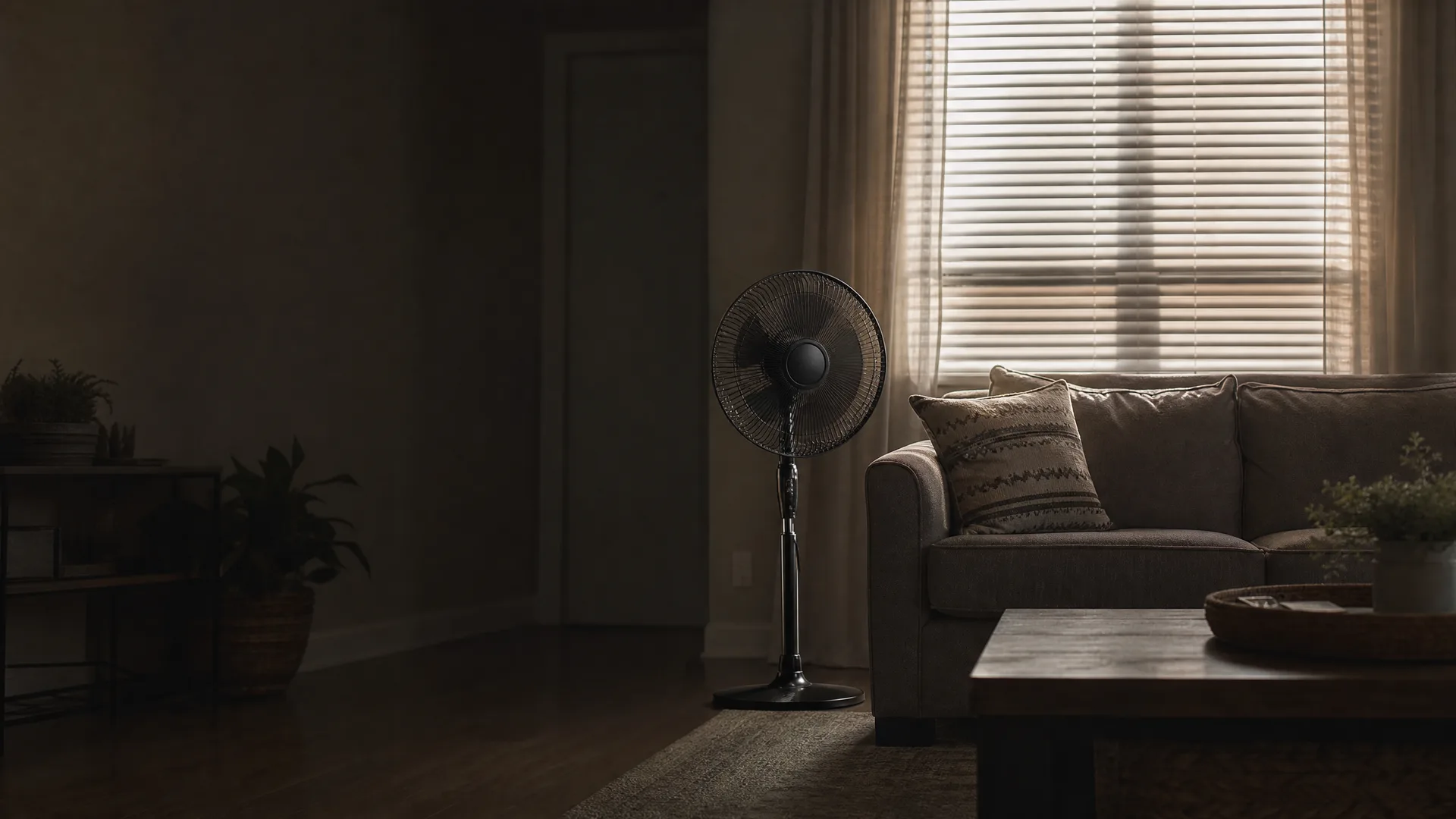
By three in the afternoon the blinds are down and the living room still feels close. A box fan runs next to the couch, pushing the same warm air around instead of cooling it. You've already checked the vent above the kitchen table and the air coming out is barely cool, more like breath than air conditioning. Outside the condenser clicks every so often, trying. Your phone is sitting on the arm of the couch with a half-written search in it, then a tab with a contractor's name, then another tab, another number to call and explain the same thing to. You set it down and go check the vent again.
Skip calling around
A seized fan motor or a bad capacitor isn't something you fix by waiting it out, and in a Maryland summer every afternoon it sits is another afternoon the compressor runs hot and your bill climbs for a house that still isn't cooling. Finding someone to look at it is its own chore: searching, calling a few numbers, explaining the same thing about the humming compressor and the still fan to each one, then waiting on quotes to compare. This page skips that. The request goes to one licensed contractor working in your area, someone who deals with condensers all summer and knows a weak run capacitor from a motor that's actually seized. No flood of calls from companies you don't know, just the one who's set up to look at your unit. With the fan down and the house heating up room by room, that's the part worth handing off now.
Call someone, or wait it out
You can leave the system off and ride out the heat with fans and closed blinds, and the fan motor or capacitor won't get any worse sitting idle. But the house keeps collecting heat through the afternoon, and nothing inside the condenser is going to fix itself. Maryland humidity makes an unconditioned house feel worse than the temperature alone suggests, and that builds hour by hour until someone looks at the unit. The other path is calling around yourself: finding a contractor who works on your brand of condenser, explaining the symptoms over the phone, maybe getting two or three quotes before picking one. Either way, the fan stays still until a tech opens the unit and finds what stopped it.
What one call gets you
A request through this page goes to one licensed Maryland contractor, not a handful of companies competing for the job. That means no string of calls back, no repeating the same description of the humming compressor and the still fan to five different people. The contractor who gets the request works on condensers all summer in this climate, so a seized motor or a failed capacitor is something seen often, not guessed at. You explain it once. From there it's a matter of getting the tech out to look at the unit and tell you what failed, instead of spending the afternoon on the phone while the house keeps getting warmer.





Thermostat calls for cooling and energizes the contactor
Compressor and fan motor both get power at once
A weak capacitor leaves the fan motor without enough starting torque
The motor hums or spins slowly but the blades don't catch


Power costs 19.53 cents per kilowatt-hour statewide
At 19.53 cents per kilowatt-hour, every hour your compressor runs hot because the fan won't turn costs more than it should. A stalled fan makes the system work harder without cooling the house, so that strain shows up directly on your next bill.
EIA-861 2025 statewide residential average
A fan that won't spin almost always comes down to a weak capacitor or a seized motor, and neither one gets better on its own while your house sits in the heat. Someone who works on condensers all summer in Maryland has seen this exact failure plenty of times and knows which one it is before the panel even comes off. You get matched with one licensed local contractor for this job, not a handful of companies calling you back at once, so you explain the problem once and deal with one person who shows up knowing what to check. The fan stays still until someone gets the right part turning it again. Once that happens, the condenser can push heat outside the way it's supposed to, and the air coming through your vents goes back to being cold instead of warm.
Describe it once
Your request stays with one local pro.
No charge to send it. You decide if you hire them.