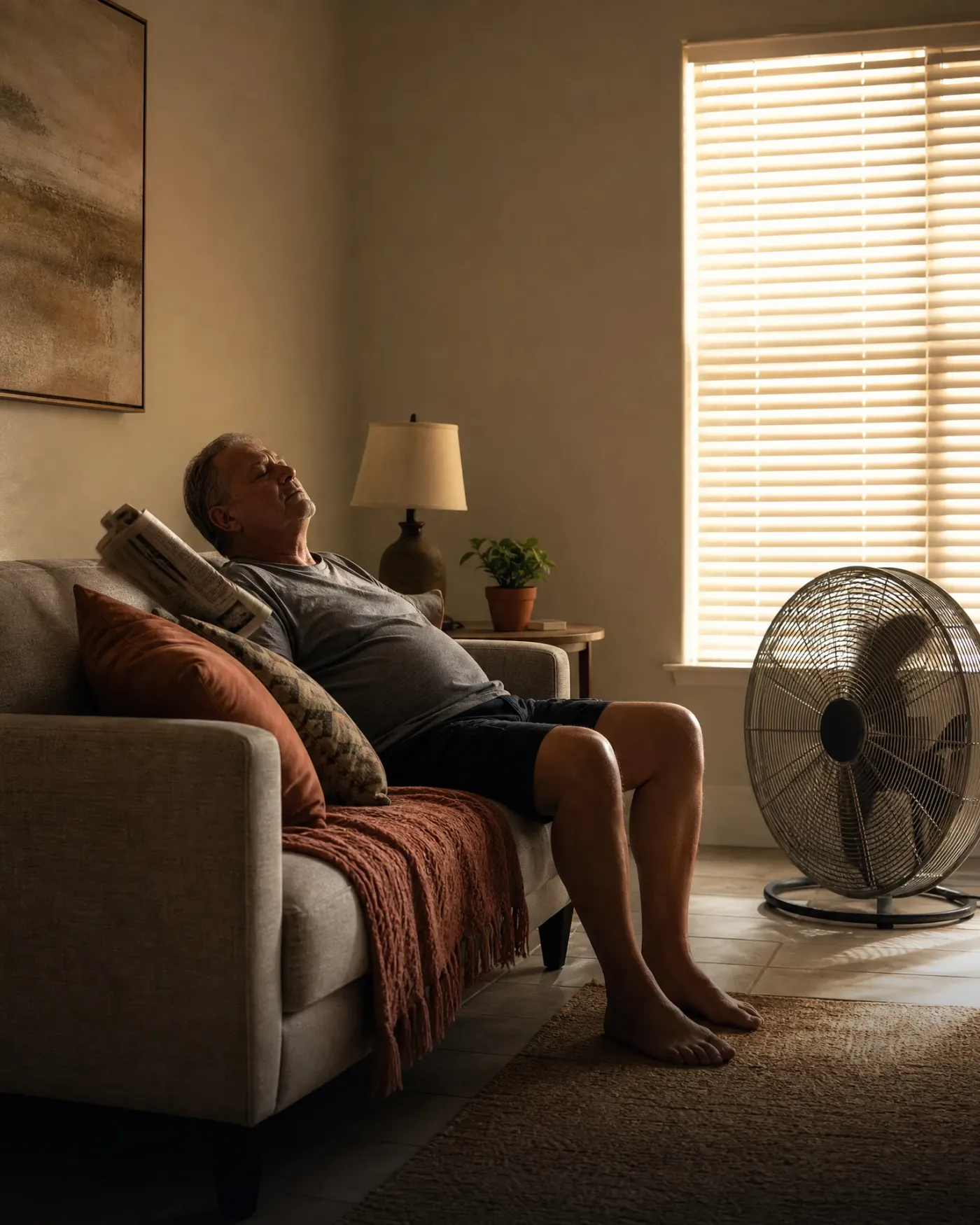
Why your AC compressor won't kick on in Maryland
A compressor that won't start is usually blocked by a safety switch, not broken outright. Most outdoor units here sit through a Maryland summer running close to their limit for months at a time, and the system has sensors built to shut the compressor down before it burns out rather than let it run into a real fault. A tripped high pressure switch, a bad capacitor that can't give the motor its starting jolt, or a thermostat signal that isn't reaching the unit are the usual causes. Sometimes it's simpler: a breaker thrown by the draw of a hard-working system, or a disconnect left switched off after a service visit. None of these fix themselves, and running the system while the compressor hums and won't engage can damage the motor further. Since most homes here cool and heat with electricity, a dead AC also means the system isn't doing its job at the one time of year Maryland homes need it most.




Why does my outdoor unit hum but the compressor never starts?
Why does my outdoor unit hum but the compressor never starts?
A failing start capacitor or contactor is almost always the cause
A hum without a start means the compressor is getting power but can't turn over. Two parts cause this almost every time. The run capacitor gives the motor the jolt it needs to start spinning, and once it weakens, the motor just sits there and draws current without moving, which is the hum you hear. The other is the contactor, the switch that feeds power to the compressor. If its contacts are pitted or stuck, power gets through partway but never cleanly. Either part can fail on its own after a summer of long run times. A contractor who checks capacitors and contactors as routine service will test both before anything is replaced.

Thermostat calls for cooling and sends power to the contactor.
The contactor closes to feed power to the compressor.
The start capacitor gives the compressor motor its initial jolt.
The compressor begins turning and building refrigerant pressure.


Hand off the air conditioner problem
A compressor that stays silent through a humid Maryland afternoon isn't something to leave alone, especially when the house relies on electricity for heat too and the electric bill already runs high. The longer the system sits locked out, the more tempting it gets to run fans or window units instead, and those cost you in the same bill without fixing anything. What you need now is someone who already knows these outdoor units, the contactors and capacitors that fail after a few summers of Maryland heat, and can tell quickly whether the fix is simple or something bigger. Sending the request puts that search in someone else's hands. One local contractor gets your information, not a handful of companies competing for the job, and that contractor works on this equipment all summer long, in this climate, on homes like yours. You stop carrying the problem alone once it's sent.
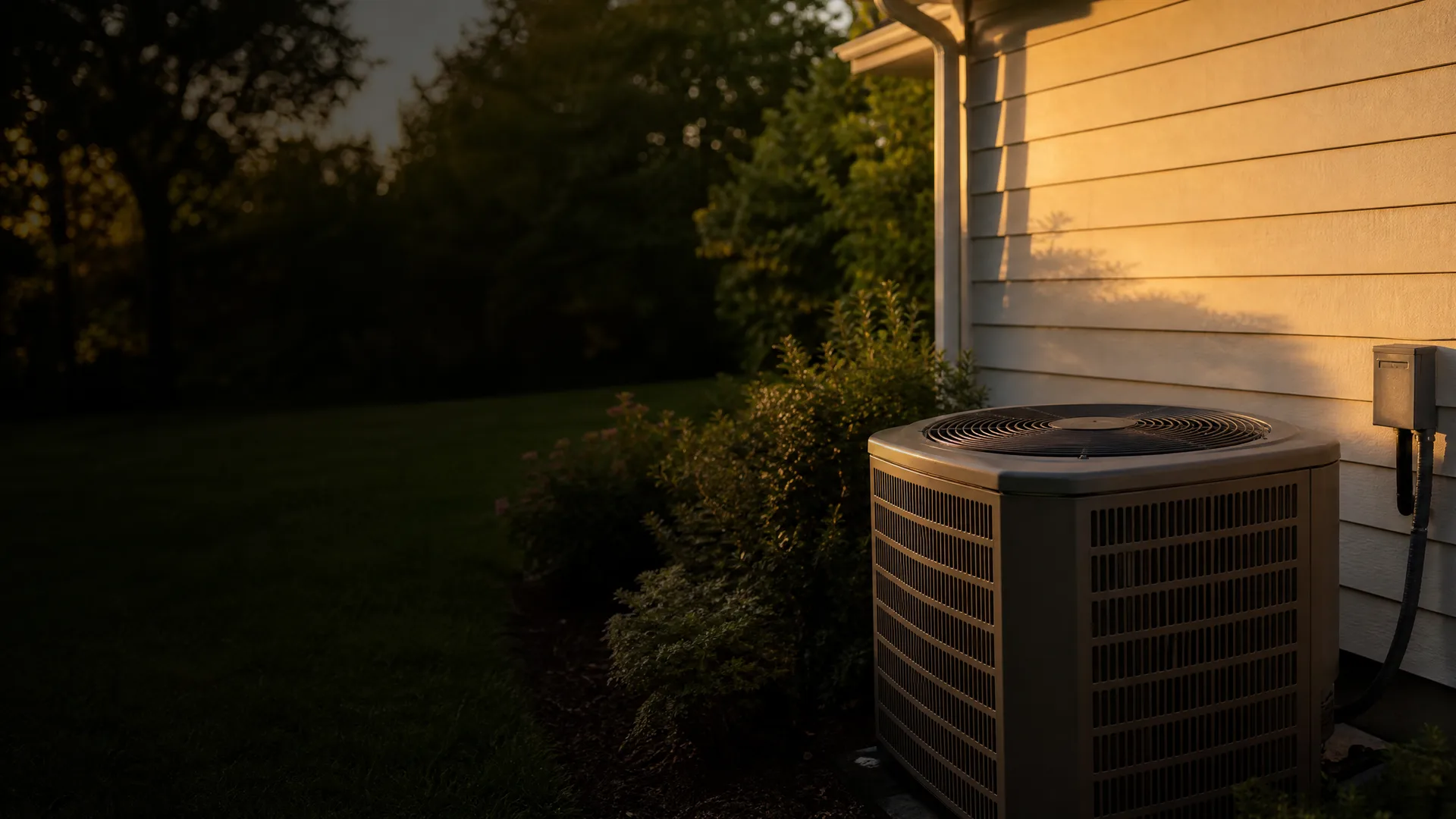
You're out back around seven, grass still warm, and the air hasn't let up since noon. The condenser sits against the house, and you notice it before you even think about it: no fan turning, no low rattle of the unit working. Just the hum of cicadas and a drip from the spigot somewhere. You walk over and put a hand near the top grille. Nothing moving. Inside, you know the thermostat is still set to 72, the house holding onto the heat it took in all afternoon. The sun's dropping behind the Millers' fence, that gold light that usually means the worst of the day is over, except tonight the house won't cool down with it.
Power costs 19.53 cents per kilowatt-hour statewide
At 19.53 cents per kilowatt-hour, a compressor that's locked out and short-cycling, kicking on for a few seconds before tripping its safety switch again, adds draw without ever cooling the house. Left alone over a few days, that's real money spent for no relief.
EIA-861 2025 statewide residential average
Where Your Compressor Stands
- A silent compressor almost always means a safety switch cut power to protect the unit, not a dead motor.
- A hum with no start points to a weak start capacitor or a worn contactor, both repairable parts.
- Leaving a locked-out compressor alone through a Maryland summer risks short cycling that wastes power without cooling the house.
- A licensed local contractor who services this equipment every summer has seen the same lockout pattern on plenty of other units nearby.
- Sending one request means one contractor looking at your system, not a string of calls to sort through.
- Once the cause is found, whether it's the capacitor, the contactor or a tripped switch, getting the compressor running again is usually straightforward.
Most of the time, a compressor that won't start isn't ruined. Something cut power to it on purpose, a safety switch doing its job, or a start capacitor or contactor that's worn out and can't give the motor what it needs to turn over. Either way, it's a part a contractor can point to and replace, not a reason to plan on a new system.
What matters now is not letting it sit. A unit that hums and trips, or won't respond at all, through a stretch of Maryland humidity is either wasting power trying to start or doing nothing while the house holds onto heat. Neither gets better on its own.
A contractor who works on these systems every summer around here has already seen this same lockout on other units nearby, maybe on your street, maybe the next one over. That's not a guess about your equipment, it's what the pattern usually turns out to be once someone with a meter is standing at the unit. One contractor gets the request, looks at the compressor, the capacitor, the contactor, and the switch that tripped, and tells you straight what's keeping it from running.
Once that's known, getting the compressor back on is rarely complicated. The part gets replaced, the switch resets, and the unit goes back to doing what it's supposed to do on a July afternoon. The hard part was never the fix. It was figuring out which part was keeping it from happening.





One request and it's handed off
The pro who reaches out is licensed in Maryland.
Sending the form costs nothing.