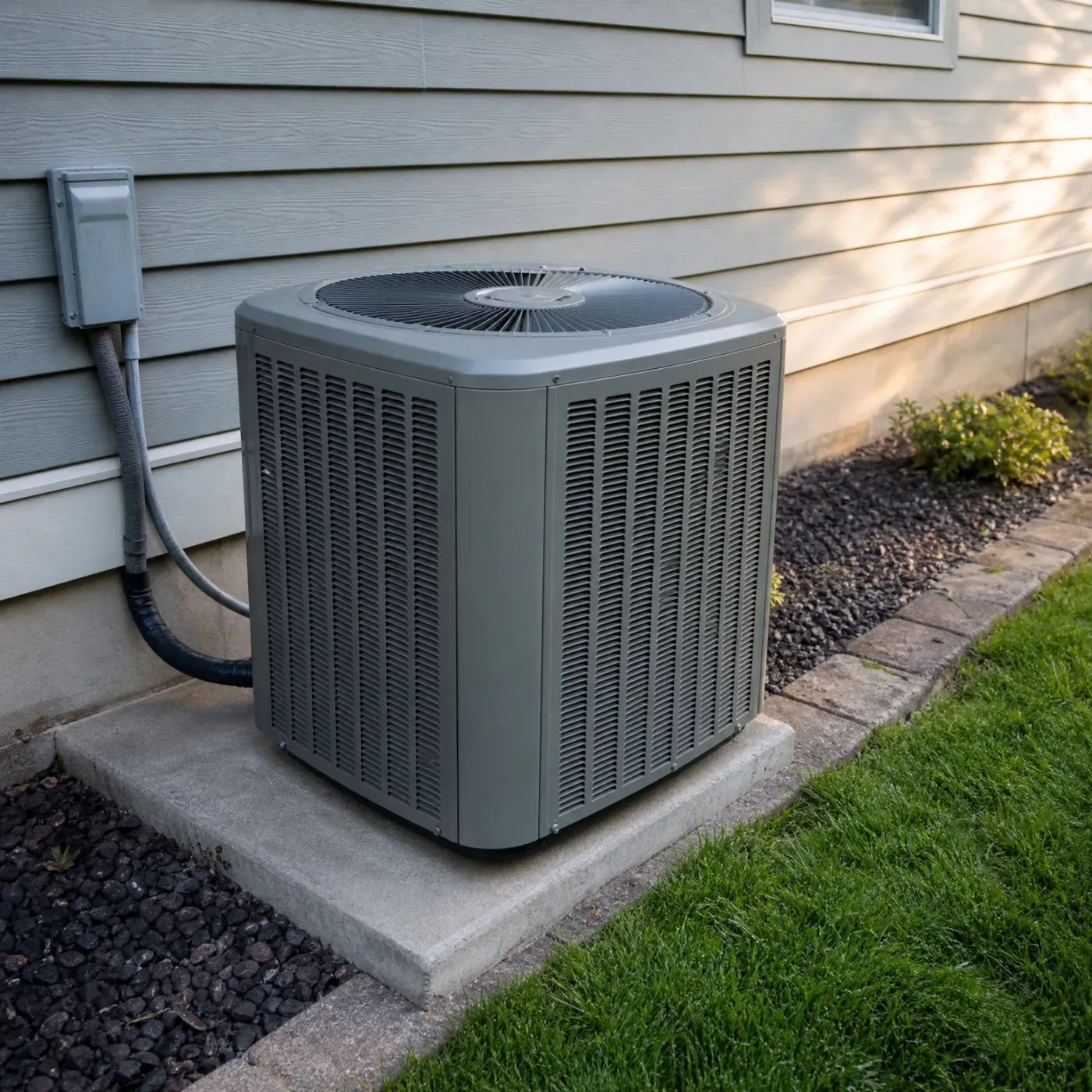
AC running as it should
This is what a system keeping up looks like. The coil stays clean, the pad is clear, and the unit cycles off once the thermostat is satisfied. On most days that's enough to keep the house comfortable without any help.
Most of Maryland's summer is humid enough that your AC alone won't keep the air feeling dry, even when the temperature reads comfortable. An air conditioner is built to cool the air, and it pulls out some moisture as a side effect, but on a muggy July day it can't keep up with the humidity load on its own. The result shows up as that clammy, heavy feeling indoors even with the thermostat set low, plus a higher risk of condensation on windows and musty air in rooms that don't get much airflow. A whole-home dehumidifier paired with your AC handles the moisture directly, so your air conditioner isn't working harder than it needs to just to feel comfortable. Whether you need one depends on how humid your house runs and how your current system is keeping up, which is worth having looked at before you decide.

An air conditioner removes moisture only while it's running, and it stops as soon as the thermostat is satisfied. On a mild day that's enough. On a sticky Maryland day, the unit shuts off before the air inside feels dry, because the temperature dropped faster than the humidity did. A dehumidifier works differently. It runs on its own humidity setting, independent of the thermostat, so it keeps pulling moisture out even after the AC has stopped for the hour.

Since most homes in Maryland heat with electricity and power here is expensive, running the AC longer just to chase humidity down adds up fast on the bill. A whole-home dehumidifier takes that job off the air conditioner, so the AC can cycle on temperature alone and shut off sooner. Less runtime means less strain on the compressor and the fan motor, and over a summer that difference is one a properly sized system is built to handle.
You understand your AC cools the air and pulls out some moisture along the way, but you want to know how a dehumidifier actually fits into the system instead of just sitting in a corner somewhere. Before you commit to adding one, it helps to picture how the two units share the ductwork and who does what.
A whole-house dehumidifier connects to your supply and return ducts, usually near the air handler. It has its own humidistat, set to a target like 50 percent, and it runs whenever the air crosses that mark, whether or not the AC is cooling. That's the real difference from your AC, which only pulls moisture out while it's running to satisfy the thermostat. On a muggy Maryland evening when the temperature's already fine but the air feels wet, the dehumidifier switches on by itself, pulls air through its own coil, and sends the drier air back through the same ducts your AC uses. The two systems share the blower and the trunk lines but answer to different controls.
This is what a system keeping up looks like. The coil stays clean, the pad is clear, and the unit cycles off once the thermostat is satisfied. On most days that's enough to keep the house comfortable without any help.

Grime on the fins makes the unit work harder to move the same heat, and a system already strained has less capacity left to handle Maryland's humidity. It still cools the air. It just can't run long enough on a sticky day to pull the moisture down with it.


One installer gets your project, so there's no bidding war over it.
No fee to send it, and nothing to sign.
Floors feel damp even though the thermostat says the house is cool. Wood doors swell and stick in their frames. Towels in the bathroom stay damp longer than they should. Mold shows up in the bathroom, in closets, along a basement wall, places with still air and no sun. Since most homes here heat with electricity, you already know what a hardworking system does to a bill, and a dehumidifier running alongside your AC pulls part of that moisture load off the compressor, which otherwise has to run longer to chase a humidity problem it was never built to fix on its own.
The air feels dry at the same thermostat setting, so you're not tempted to drop it a few degrees just to feel comfortable. Wood furniture and floors stop swelling with the season. Musty smells in closets and the basement fade because the moisture feeding them is gone. Your AC cycles the way it's supposed to, cooling the air without being asked to also wring the humidity out of it. Getting this installed right matters, since the dehumidifier has to tie into your ductwork and work with your AC rather than against it, which is why it calls for someone who does this kind of work regularly.


A whole-house dehumidifier doesn't sit next to your AC so much as plug into it. It shares the same duct runs, so there's no second set of vents cut into your walls or ceilings. Inside the unit, air passes over its own cold coil, separate from the one in your AC, and the moisture that condenses there drains off, often through the same line your AC already uses. The part that matters most is the humidistat. It runs the dehumidifier on its own schedule, based on moisture in the air, not on whether the thermostat is calling for cooling. That means on a muggy day when your AC has already cooled the house and shut off, the dehumidifier keeps pulling water out of the air it's still moving through those same ducts. Over a sticky afternoon that can add up to several extra pints, without the house getting any colder than it already is. It's a simple setup once it's tied in, but getting the connections and drain right is the kind of work that calls for someone who installs this equipment regularly.




At 19.53 cents per kilowatt-hour, every hour your AC runs costs more here than in most states. If your air conditioner keeps cycling on just to chase down moisture that's still hanging in the air, you're paying that rate for runtime that isn't making the house feel any drier.
EIA-861 2025 statewide residential average
Humid air gets pulled into the ductwork by the system's blower.
The dehumidifier's own coil chills that air well past your AC's setpoint.
Moisture condenses out of the air onto that coil and drains away.
The drier air gets reheated slightly before it returns to the ducts.

A dehumidifier tied into your ductwork handles the moisture your AC leaves behind, and that's the short answer to what you came here asking. The two work off separate controls, so your house stays dry on the mild days and the sticky ones alike, without your AC cycling longer than it needs to.
Getting that installed right, on your ducts, in your house, is its own job. A contractor who works on these systems every summer in Maryland knows which installs run into trouble and which don't, and once you're matched with one, they'll reach out directly. You'll be working with one local, licensed contractor, not fielding calls from a handful of companies trying to win the job.