Tell us about the job
Takes about a minute. No obligation.
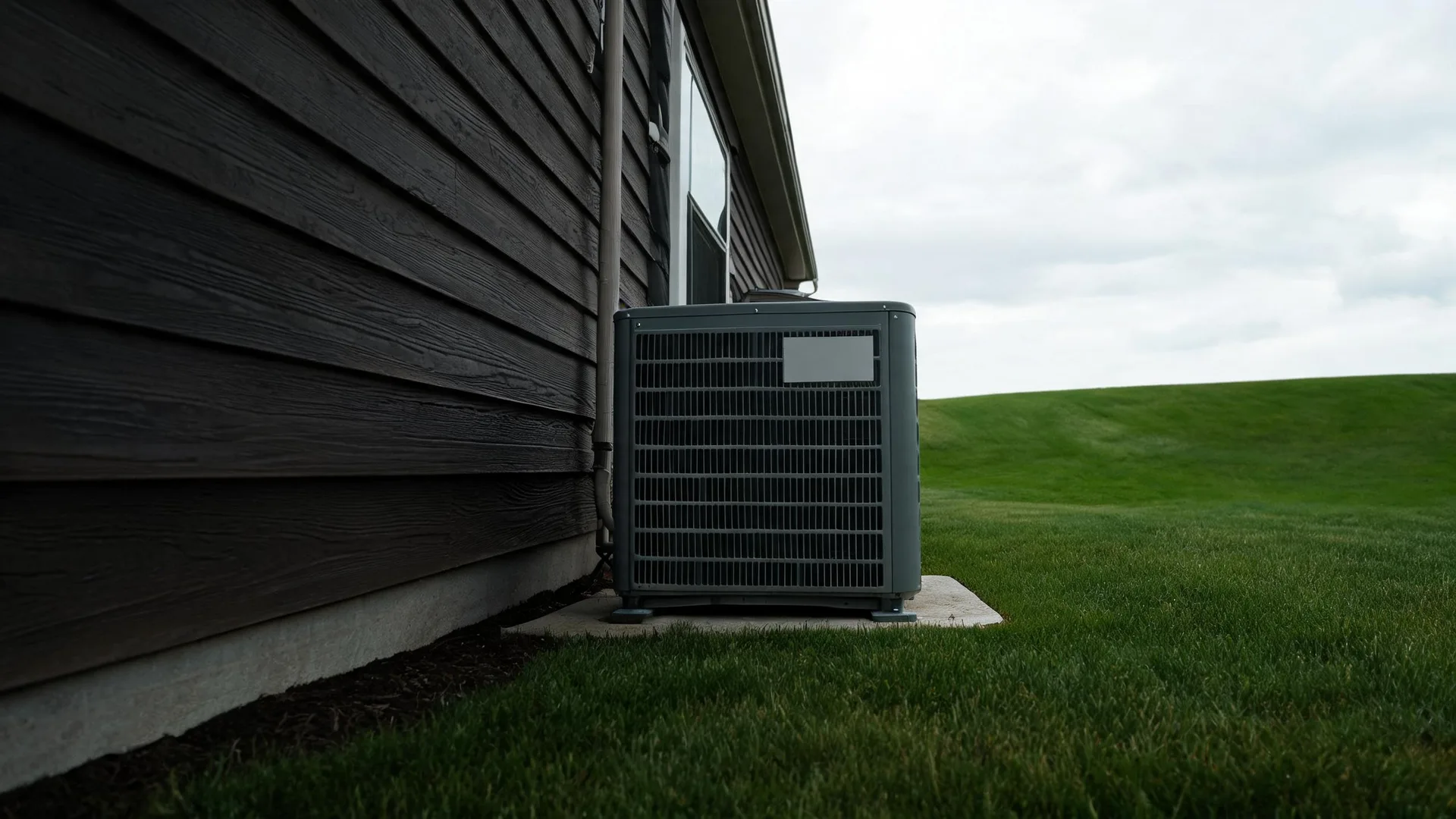
Sizing a central AC system in Dorchester County requires a contractor to work out exactly what the compressor will be asked to carry before a single line item goes on the quote. Homes in Dorchester County, MD run cooling about four months a year, from June through September. The compressor, the condenser fan, and the contactor all accumulate wear across that window, and a system that is undersized for the actual load will cycle harder and more often than the manufacturer designed it to. An installer who skips a proper load calculation leaves the homeowner with a unit that struggles from its first season and degrades faster as the years pass.
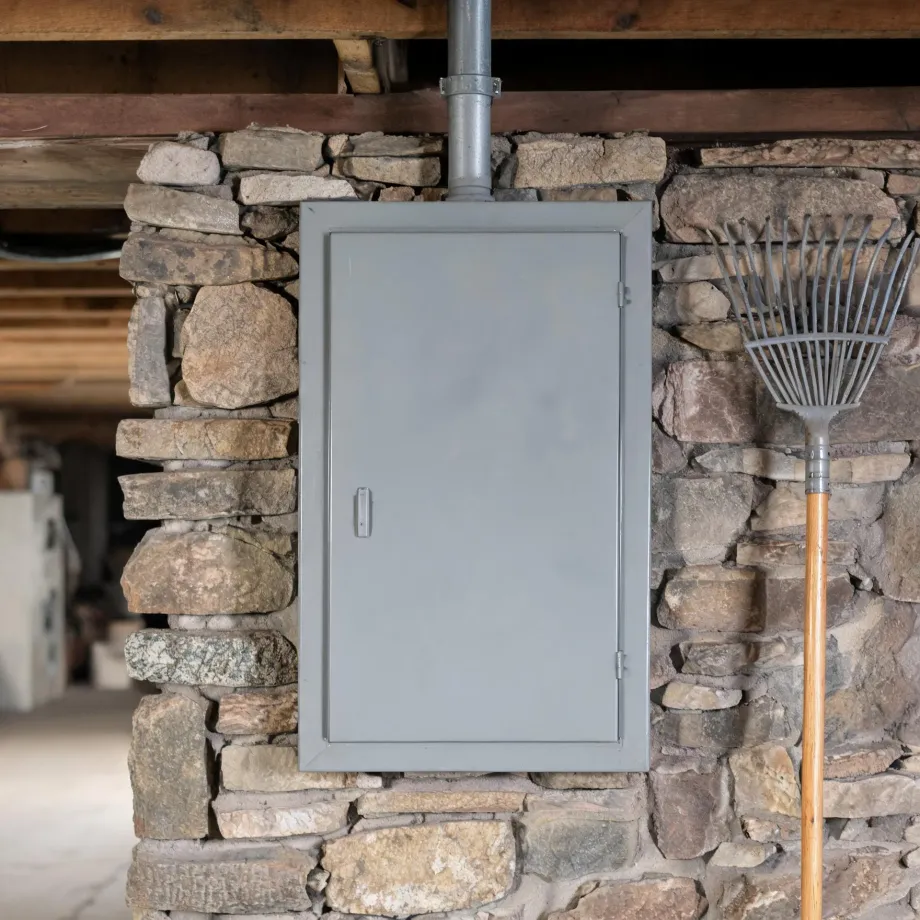
Ductwork sized and routed for an older system is what a contractor finds behind the walls of a large share of homes here. Half the homes in Dorchester County, Maryland were built in 1975 or earlier (2020-2024 ACS 5-year). That generation of construction was built around equipment with different airflow demands, and the ducts reflect it: runs that made sense then may restrict a new system or leave rooms underserved. The electrical tells a similar story, with service panels that were not sized for the draw a current unit pulls. A contractor quoting an installation has to assess both before the equipment choice matters much.
What a Central AC System Includes
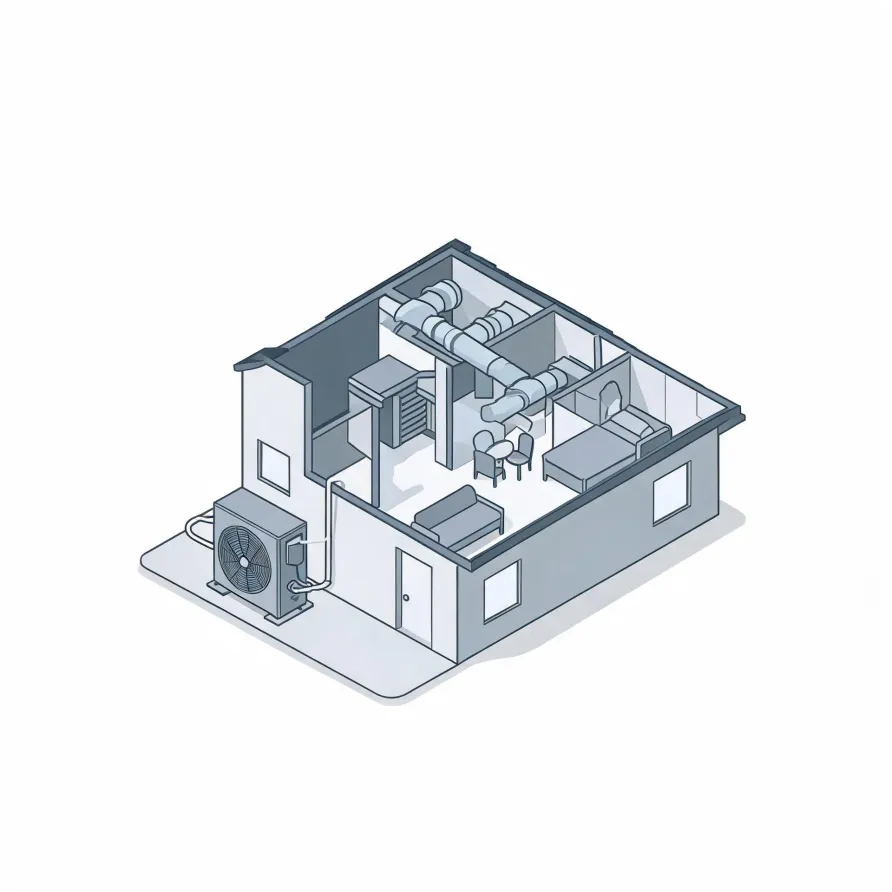
The outdoor condenser unit sits on a concrete pad beside the house and holds the compressor and condenser coil, which are the heart of the system. Inside, the air handler or furnace cabinet mounts in a utility space, basement, or attic and contains the evaporator coil that pulls heat out of your indoor air. A contractor connects both pieces and sets them up to work as one system.
The thermostat goes on an interior wall where it reads your home's temperature and tells the system when to run. A condensate drain line runs from the evaporator coil to a floor drain or outside, carrying away the moisture the coil pulls from the air. A disconnect box mounts near the outdoor unit and gives the contractor a safe shutoff point for service.
The drawing shows a typical layout, and a licensed contractor determines exactly how each piece fits the configuration of your home.
Get matched in Dorchester CountyDorchester County, by the numbers
85 severe weather events were recorded in Dorchester County, Maryland between 2015 and 2024.
NOAA National Centers for Environmental Information, Storm Events Database, bulk CSV export, events 2015-01-01 through 2024-12-31.Half the homes in Dorchester County, Maryland were built in 1975 or earlier (2020-2024 ACS 5-year).
U.S. Census Bureau, 2020-2024 American Community Survey 5-Year EstimatesDorchester County, Maryland holds 16,433 housing units (2020-2024 ACS 5-year).
U.S. Census Bureau, 2020-2024 American Community Survey 5-Year EstimatesOwners occupy 65.6% of the occupied homes in Dorchester County, Maryland (2020-2024 ACS 5-year).
U.S. Census Bureau, 2020-2024 American Community Survey 5-Year EstimatesRules & Standards Behind Central AC Installation in Dorchester County, Maryland9 sourced rules and standards
What happens on installation day
Split-system central air conditioners rated below 45,000 Btu/h manufactured on or after January 1, 2023 must meet a federal minimum of 13.4 SEER2.
Split-system central air conditioners rated at or above 45,000 Btu/h manufactured on or after January 1, 2023 must meet a federal minimum of 13.4 SEER2.
Split-system central air conditioners manufactured between January 1, 2015 and December 31, 2022 had to meet 13 SEER, the metric that preceded SEER2.
Single-package central air conditioners manufactured on or after January 1, 2023 must meet a federal minimum of 13.4 SEER2.
Space-constrained central air conditioners manufactured on or after January 1, 2023 must meet a federal minimum of 11.7 SEER2.
Federal efficiency standards for split-system central air conditioners and heat pumps are set on each certified combination of outdoor unit and indoor coil rather than on the outdoor unit alone.
Residential and light commercial air conditioning and heat pump systems assembled in the field, including mini-splits and unitary systems, may not be installed on or after January 1, 2025 using a refrigerant with a global warming potential above 700.
A field-assembled system whose specified components were all manufactured or imported before January 1, 2025 carries no installation compliance date under the refrigerant restrictions and may still be installed.
Licensing and Legal Requirements in Dorchester County, Maryland
Maryland requires a state licence before an individual provides, or assists in providing, heating, ventilation, air-conditioning or refrigeration services.
Severe Weather Events in Dorchester County
Dorchester County's climate puts real stress on cooling equipment, and that stress is not abstract. A central AC system sized and installed for local conditions handles demand better than one spec'd for somewhere else.
85 severe weather events, 2015–2024. Source: NOAA National Centers for Environmental Information, Storm Events Database.